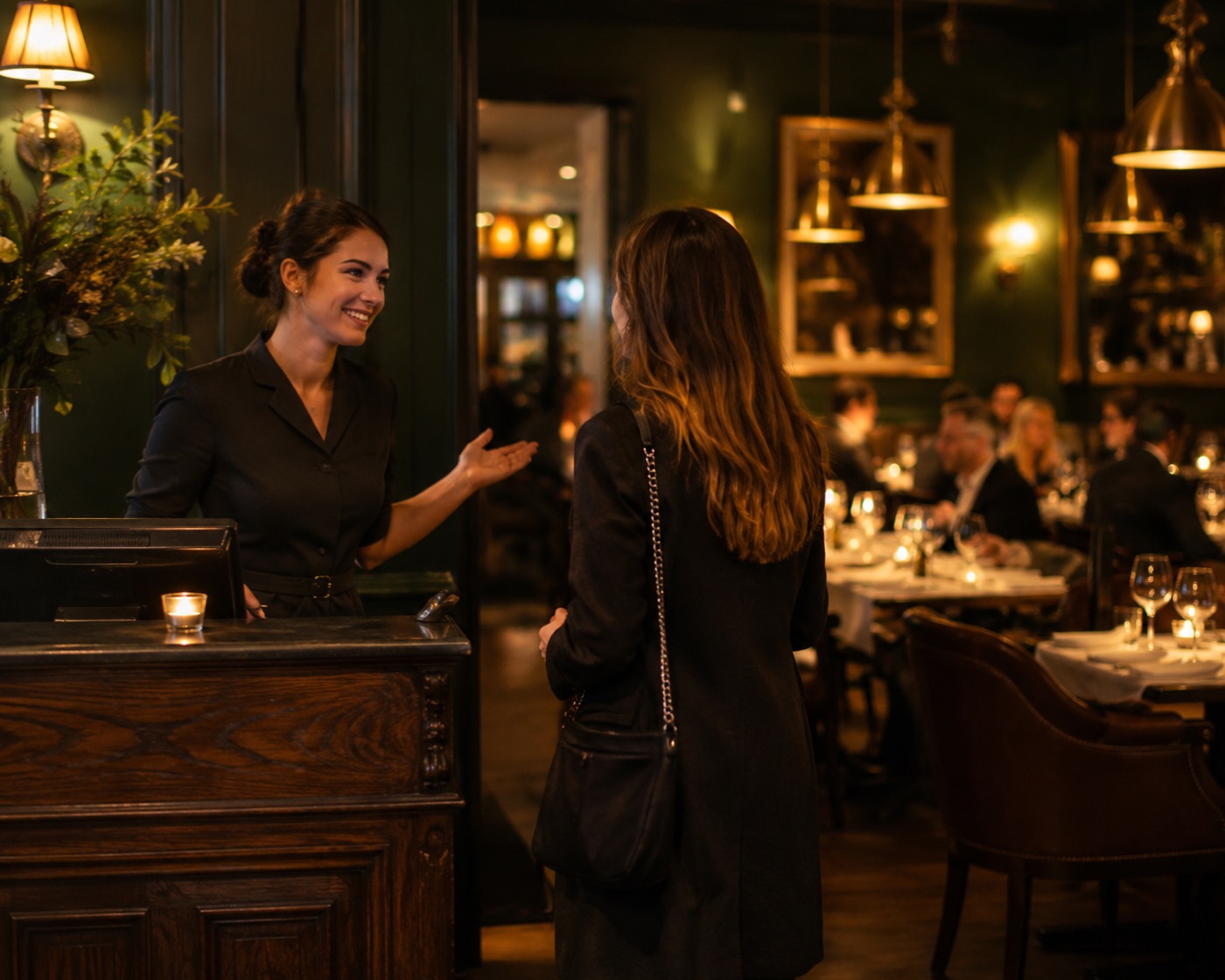
Walk into your favourite restaurant and the best-case scenario is this: someone remembers you. Your name, your table, the fact you're allergic to shellfish. It's why regulars are regulars.
The problem is that memory lives in people — and hospitality has some of the highest staff turnover of any UK industry. A new hire doesn't know your regulars. A regular who feels unknown books somewhere else. Every departure walks out with a piece of the institutional memory that makes guests come back.
FoodFace is our answer: an AI guest-recognition system for hospitality venues. This post covers what it does, the results from production deployments, and — because it's the first thing every operator asks — how it stays on the right side of GDPR.
The host stand is where loyalty is won or lost
The host stand is the first impression. A queue that moves slowly, or a team that doesn't know who's arrived, sets the tone for the whole visit — before a single dish leaves the kitchen.
Most venues try to solve this with preference cards in a binder or a column in a spreadsheet. They're never current, and never with the right person at the right moment. The floor team improvises, and guests notice.
What happens when a regular walks in
- A camera at the entrance sees a familiar face. FoodFace processes the frame in under a second.
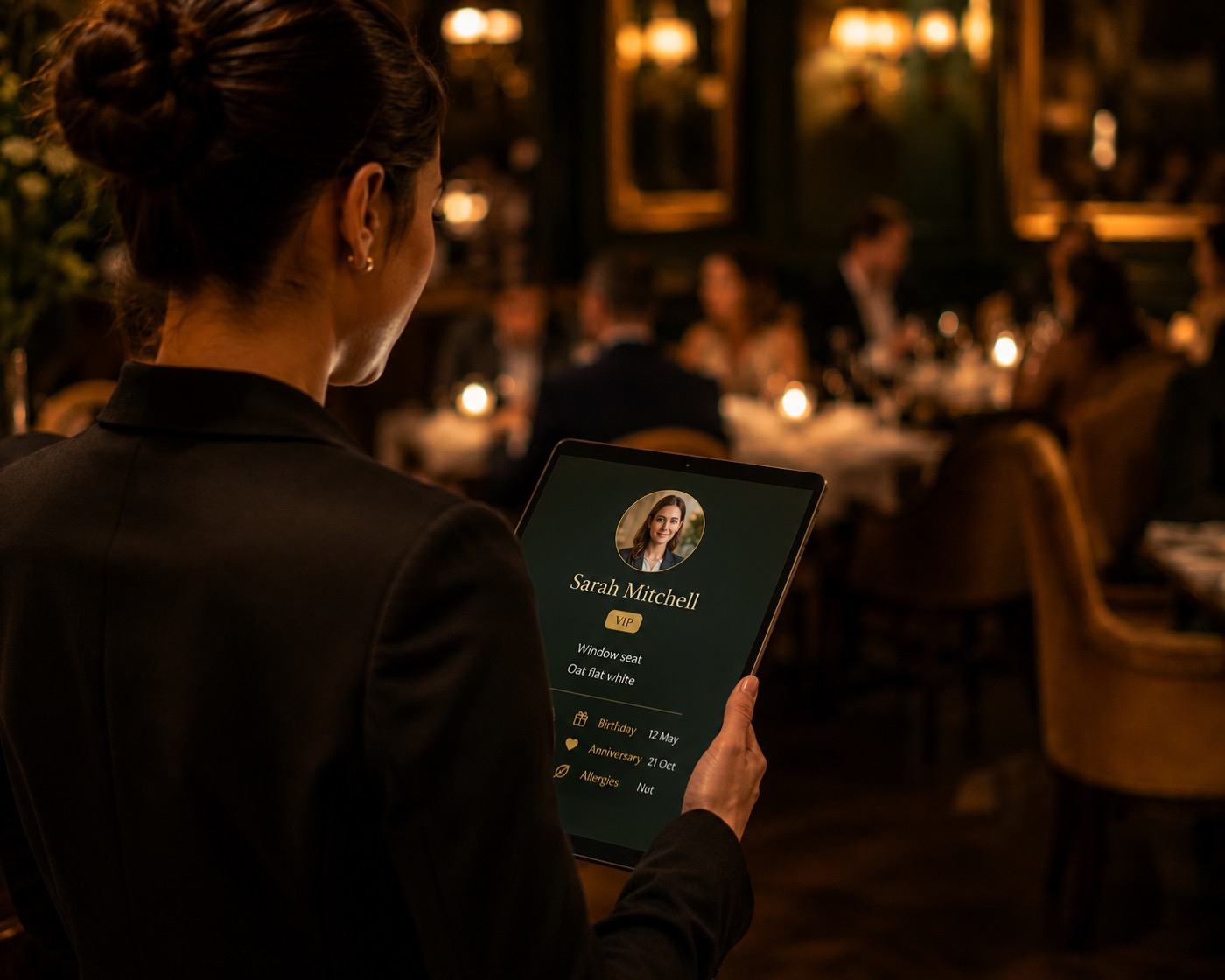
- The guest profile surfaces instantly — name, visit history, preferred table, dietary notes, VIP tier.
- The host's device buzzes. Staff greet the guest by name before they reach the stand. The bar already knows their usual.
The team sees one card per guest: photo, visit count, favourite items, allergies, spend history, last visit. Enough context to make someone feel genuinely remembered — not surveilled.
FoodFace recognising a returning guest and surfacing their profile to the host.
The numbers from production
- 40% shorter wait-to-greet times against pre-deployment baseline
- 85% recognition accuracy for enrolled guests
- Under one second from camera frame to profile match
Wait-time trends are measured in the dashboard against each venue's own baseline, so operators see the effect on their floor, not an industry average.
The family-run case: being in two places at once
Everything above assumes a host stand and a floor team. Plenty of restaurants have neither. In a family-run place, the same person preps in the kitchen, plates the food — and is somehow also supposed to be at the front every time the door goes.
This is where FoodFace earns its keep in a different way. When someone walks in, your phone pings before you've put the knife down — and tells you who it is:
- A regular — name and usual order on the notification. Worth stepping out for; greet them like you saw them yesterday.
- A supplier or employee — enrolled faces can carry any category you like: supplier, staff, courier, the landlord. The veg delivery doesn't need you to drop the knife.
- A new face — a walk-in. Now you know a proper first-impression welcome is needed.
The point isn't replacing anyone — in a two-person operation there's no one to replace. It's that you no longer need an extra pair of hands at the front for the hours you can't justify one. You're in the kitchen doing what you love, and at the door in the moments that actually need you.
"Is this legal?" — consent first, always
Facial recognition in a public-facing venue is a serious data-protection question, and it should be. FoodFace is built consent-first:
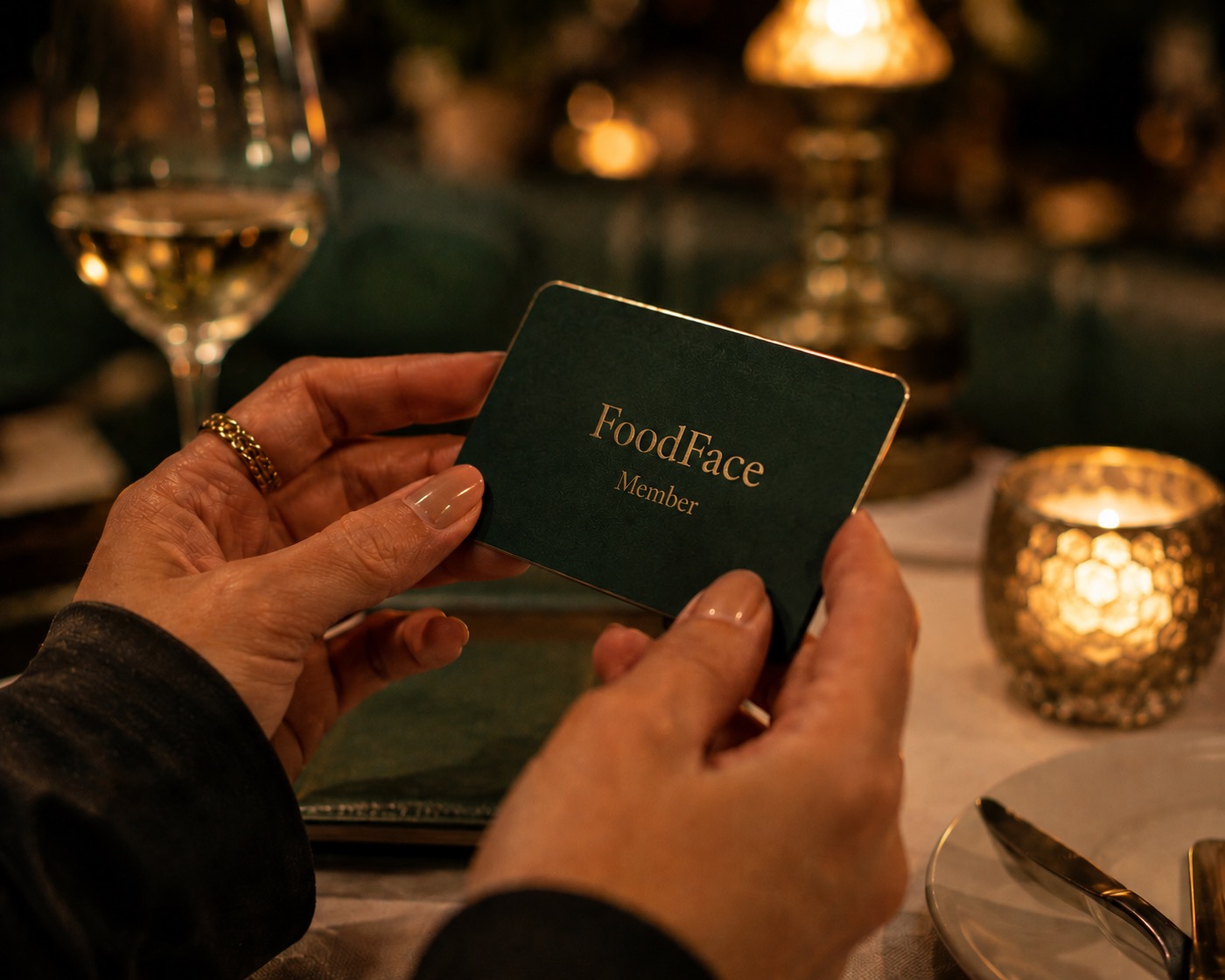
- Guests opt in at booking, on their first visit, or via a loyalty card. No silent data collection — a face that hasn't opted in is not enrolled and not matched.
- Opt-out requests are handled in the dashboard, alongside recognition logs, so there's an audit trail.
- Below-threshold matches are flagged, not acted on. The host sees "possible match" rather than a confirmed greeting — staff stay in control of the moment.
In practice, framing matters: guests who opt in are joining a recognition programme that gets them their favourite table and a faster welcome. Positioned that way, it reads as VIP treatment — because it is.
How a deployment works
No new equipment needed. FoodFace works with the CCTV cameras most venues already have — if your entrance is on camera today, you're most of the way there.
We deploy for a single venue first, typically as a four-week pilot. We handle camera setup, the enrolment flow, and staff onboarding. You see your own recognition rates and wait-time data before committing to a full rollout.
If you run a restaurant, hotel, or members' venue and want the walkthrough, the FoodFace page has the full product tour — or book a free call and we'll talk through whether your floor is a fit.